If you’ve ever learn “clinically examined” on a bottle and nonetheless felt uncertain, you’re not alone. Quite a lot of skincare language sounds scientific, however it doesn’t all the time imply what individuals assume it means. It additionally doesn’t assist that skincare is a loud area. Trends transfer quick, and many individuals say they see misinformation and complicated claims on a regular basis. Even well-meaning creators usually repeat probably the most thrilling model of the story. Here’s the calm reality: substances aren’t “good” or “unhealthy.” Evidence sits on a spectrum. Some substances have sturdy human information. Some have early hints. Some are principally advertising. This information explains the right way to consider skincare substances realistically, utilizing proof fairly than hype.
What Counts as “Evidence” in Skincare?
Not all proof solutions the identical query. When you’re asking, “Will this assist my skin?” the kind of examine issues as a lot because the headline.
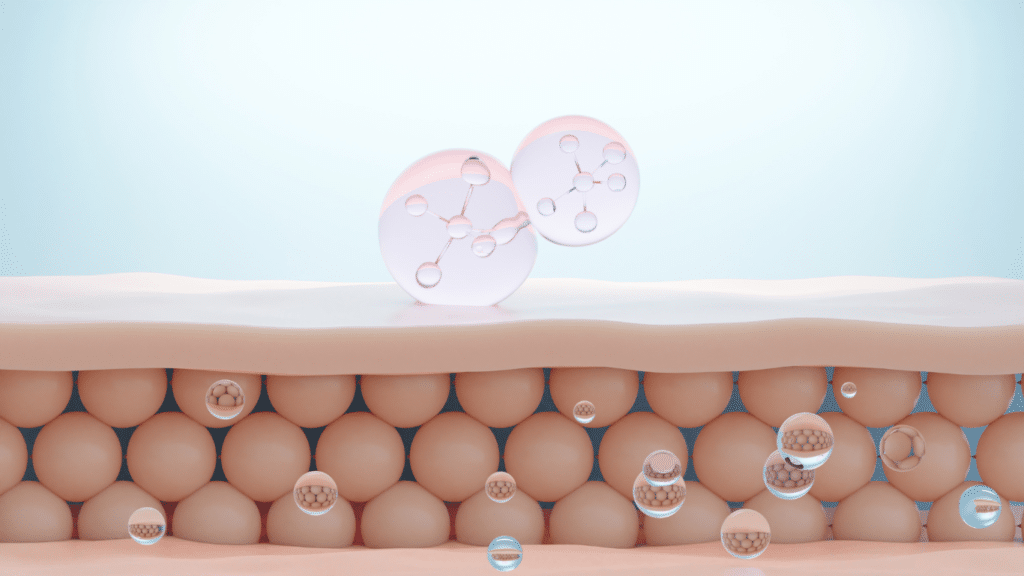
In vitro (lab/check tube/ petri dish)
- What it tells you: The ingredient can do one thing to cells or enzymes in a managed setup.
- What it could actually’t let you know: Whether it really works on actual human skin at real-life concentrations, inside a completed components.
Lab information is helpful for concepts. It just isn't proof of outcomes. It helps beauty chemists resolve what substances have potential in formulations, relying on the objective of the product.
In vivo (dwelling tissue, however not essentially people)
This can embrace animal research (much less frequent in trendy beauty analysis) or different dwelling fashions like clusters of cells grown to imitate skin tissue.
- What it tells you: There could also be a organic impact in a dwelling system.
- What it could actually’t let you know: Human skin on a dwelling human being is completely different. Application, absorption, irritation, and real-world use are completely different.
Human medical research
This is the proof most individuals suppose they’re getting once they hear “clinically confirmed.”
But even human research range quite a bit. Stronger research normally embrace:
- Enough folks that the outcomes aren’t simply luck
- A comparability group (placebo/car or one other lively)
- Blinding, contributors and/or evaluators have no idea which merchandise have been used (so expectations don’t drive the end result)
- A sensible timeframe (skin adjustments take time, and completely different adjustments require completely different quantities of time)
Sample dimension, with out the mathematics:
A examine on 12 individuals will be fascinating. A examine on 100+ individuals is more durable to “by chance” misinterpret. And when a number of research in several teams level to the identical consequence, confidence goes up.
Why Marketing Claims Are Often Misleading (Even When They’re Not Lying)
A model will be technically truthful and nonetheless depart you with the fallacious impression. That’s not all the time “evil advertising.” It’s simply how claims work. Here are among the commonest loopholes.
Cherry-picking Only Favorable Results
When manufacturers fee a examine isn't for only one factor. A examine may measure 10 issues, and the model chooses to solely promote the one which improved.
Example: “Improves radiance!” may imply a subjective glow score modified, even when darkish spots didn’t.
And whereas that improved radiance is a profit, that distinction issues if pigmentation change, not basic “radiance,” is your objective.
Short examine durations
Some adjustments (like non permanent hydration) can occur quick. Others (like pigmentation or wrinkles) normally take longer.
If the examine is 7–14 days, it might solely seize short-term results. So when you're taking a look at information from manufacturers, you need to ensure that the examine analysis and length are related to the product’s marketed advantages.
Ingredient testing vs completed product testing
Ingredient suppliers run research on their uncooked materials, they usually get information and outcomes. They use this for advertising and to persuade manufacturers how efficient their substances are. And generally a model then makes use of that ingredient, however:
- at a distinct focus,
- in a distinct components,
- with completely different packaging and stability.
And these adjustments can have an effect on the efficiency of the ingredient. It doesn’t make the ingredient provider’s outcomes “pretend.” It simply means the proof might not switch cleanly.
“Clinically examined” language
“Clinically examined” usually simply means it was examined on people indirectly. It doesn't robotically imply:
- placebo-controlled
- peer-reviewed
- independently run
- giant sufficient to belief
So deal with that phrase as: a place to begin, not a end line. That kind of phrase ought to make you curious to be taught extra in regards to the outcomes and methodology, not set off automated belief and a purchase order.
How to Interpret Ingredient Studies as a Consumer
You don’t must learn papers like a researcher. You don’t want formal scientific coaching to guage skincare research, only a constant technique to ask the precise questions. So don’t fear about turning into aware of a ton of scientific jargon. That’s the place this website and all the sources on it are right here to assist. For starters, here's a repeatable set of questions you need to use to guage merchandise rapidly and reliably.

The 4-question framework
1) What was examined: an ingredient, or the completed product?
Finished product testing is normally extra related to what you’ll truly use.
2) On whom?
- People with the priority you care about (zits, melasma, dryness)?
- Or “wholesome volunteers” with minimal points?
3) For how lengthy?
Match the timeline to the declare and situation you are attempting to handle:
- Hydration: days to weeks
- Pigment adjustments: usually weeks to months
- Texture/wrinkles: usually months (and adjustments will be refined)
4) Against what?
The comparability issues:
- Vehicle/placebo-controlled: helps isolate the ingredient
- Compared to a different lively: helps you see relative worth
- No comparability group: more durable to belief (skin adjustments over time anyway)
A fast “energy test”
If you may solely discover:
- a model infographic,
- a earlier than/after with no particulars,
- or a single small examine with no management group…
That’s not “nothing.” But it’s not sturdy proof both. It belongs within the early bucket.
Where Ingredient Evidence Commonly Breaks Down
This is the place individuals get burned, particularly sensible consumers who did “analysis” however nonetheless didn’t get outcomes.

Unknown focus
Many merchandise don’t disclose percentages. And dose issues. Even a well-studied ingredient can underperform if the quantity is just too low.
This is why transparency round concentrations and testing strategies issues.
Formulation adjustments all the things
Two merchandise can comprise the identical ingredient and carry out very in a different way due to:
- pH
- solvent/car
- stability (does it degrade in gentle/air?)
- packaging (jar vs airless pump)
- interactions with different substances
You don't must search for all of this in each product you have an interest in, although. This is the place the top product formulation testing turns into essential, as a result of it's going to present you if these product traits have an effect on the product’s efficiency.
Skin kind and baseline variations
Studies report averages. Your skin is exclusive, and it's not doable to foretell precisely the way it will react. Real individuals range, and people variations can have an effect on the way in which a product performs in your skin.
- delicate vs resilient skin
- oily vs dry skin
- deeper vs lighter skin tones (particularly in pigment analysis)
- completely different climates, routines, and sunscreen habits
Translational gaps
A mechanism could make sense on paper and nonetheless fail in observe. Skin is a barrier by design. Your skin is designed as your physique’s first line of protection, and it does its job rather well. Many molecules battle to succeed in significant targets with out the precise supply system.
How I Use Evidence When Evaluating Ingredients
When I weigh whether or not an ingredient “works,” I’m not in search of perfection. I’m in search of probably the most sincere prediction of what a typical individual may expertise.
What I prioritize
- Human information over lab information, particularly for real-world outcomes
- Studies that evaluate to a car/placebo, generally advantages occur naturally over time so merchandise ought to show they're serving to this alongside, not simply taking credit score on your physique’s pure processes
- More than one examine, ideally from completely different teams
- Outcomes that match actual targets (not imprecise “radiance” alone)
- Safety and tolerability, as a result of an ingredient that irritates you is never “efficient” in actual life
What I low cost
- In vitro outcomes introduced like ensures
- Single, tiny research with massive conclusions
- “Consumer notion” claims with out goal measures
- Before/afters with no routine particulars, lighting management, or timeframe
How I deal with combined proof
Mixed proof is regular. When outcomes are inconsistent, I normally ask:
- Is the impact small, or simply arduous to measure?
- Is it possible focus/formulation dependent?
- Is the profit definitely worth the irritation threat and price?
- Are there different choices with stronger proof for a similar objective?
That’s the way you keep grounded when advertising is loud.
Applying This Framework to Real Ingredients
This is the place the framework turns into sensible, with out turning right into a chemistry class.
- Brightening substances: Often marketed aggressively, and outcomes rely closely on sunscreen, time, and the way “darkish spots” are measured.
- Hydration substances: Many present quick, actual enchancment, however “hydrated” isn’t the identical as “barrier repaired,” and results will be non permanent.
- Botanical actives: Some have promising information, however plant extracts range quite a bit by supply and processing. Great space for “mechanism” hype.
I exploit this similar framework throughout ingredient breakdowns, comparisons, and product evaluations all through the positioning.
Conclusion: Evidence Helps You Choose Better, Not Perfectly
Understanding proof gained’t assure outcomes, as a result of skin is private, merchandise range, and research can’t predict each end result. But proof will make it easier to make higher choices over time. It helps you notice weak claims, set reasonable timelines, and spend your vitality on choices which have an actual observe document. If you discover this type of evidence-based breakdown useful, I share deeper analyses and updates by my e mail listing.