Caffeine for Under Eyes: What It Is, How It Works, and Why It Matters

Caffeine for Under Eyes: The Complete Science-Backed Guide to Brighter, Depuffed Eyes

Introduction: Why Your Morning Coffee Ingredient Belongs in Your Skincare Routine

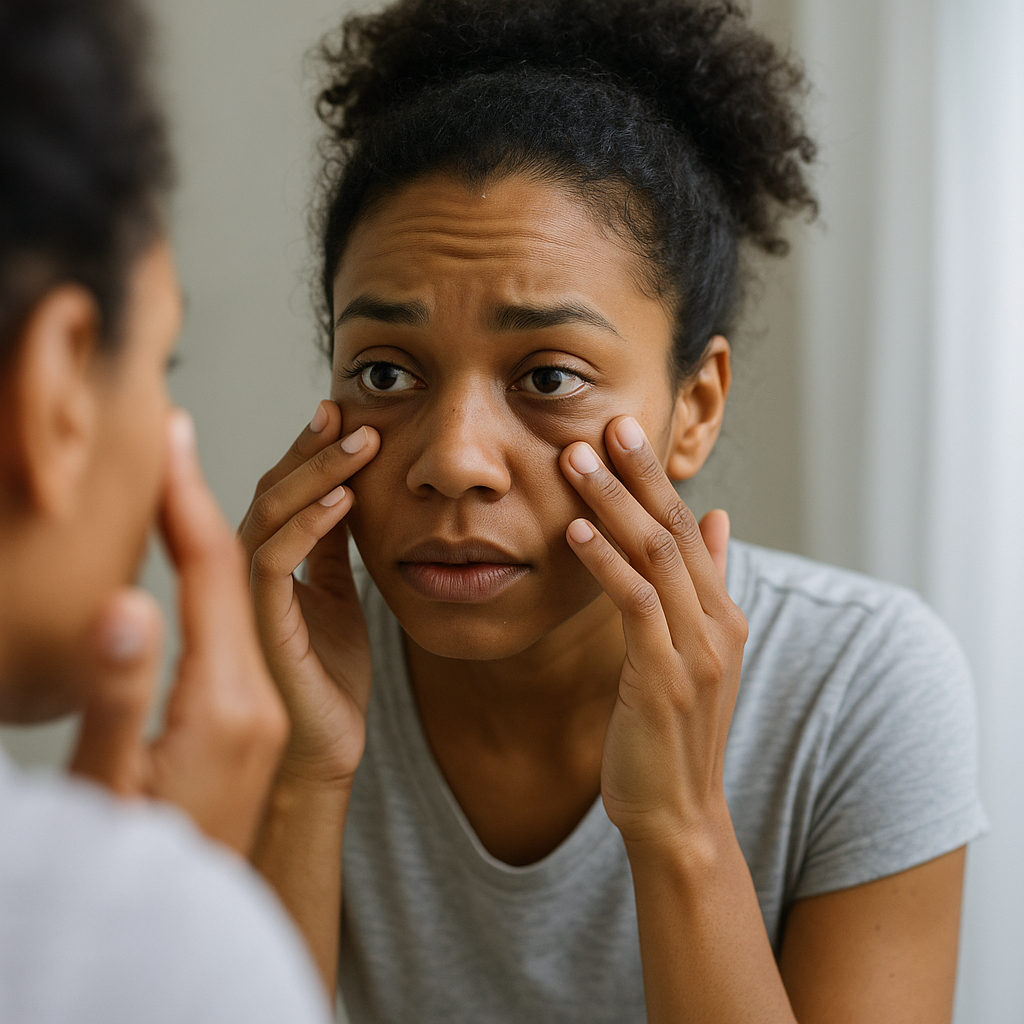
There is something deeply frustrating about a rough night's sleep announcing itself on your face before you've even had your first cup of coffee. You look in the mirror and there they are — puffy, swollen under-eyes, dark shadows that make you look exhausted even after you finally got some rest, and fine lines that seem more pronounced than they were yesterday. If this experience sounds familiar, you are in very good company. Under-eye concerns are consistently among the most searched skincare topics globally, and for good reason: the skin beneath your eyes is among the thinnest, most delicate, and most visually prominent skin on your entire face.
What might surprise you is that the very compound powering your morning cup of coffee — caffeine — has emerged as one of the most scientifically supported active ingredients in modern under-eye skincare. Not because it's trendy (though it certainly is), but because it has a unique combination of biological effects that directly address the mechanisms behind puffiness, dark circles, and under-eye fatigue.
This guide covers everything: the science of how caffeine works on under-eye skin, what the clinical research actually shows, who benefits most, how to choose the right product, how to build an effective routine around it, and crucially — when caffeine is not the right solution for your specific concern.

Understanding the Under-Eye Area: Why It's So Challenging

Before diving into caffeine specifically, it helps to understand why the under-eye area is so uniquely difficult to treat — and why generic moisturizers and face creams often fail to deliver meaningful results there.

The Anatomy of the Under-Eye Zone

The skin beneath your eyes is approximately 0.5mm thick — about three to five times thinner than the skin on the rest of your face. This thinness has several important consequences:
Blood vessels are more visible: The dark blue-purple tint of dark circles is often simply the color of blood vessels showing through thin, translucent skin. This is especially prominent in lighter skin tones but affects all skin types.
Fluid accumulates easily: The loose connective tissue beneath thin under-eye skin allows fluid to pool more readily than elsewhere on the face. This is why puffiness is concentrated under the eyes and worsens after salty food, alcohol, crying, allergies, or poor sleep.
Collagen depletes faster: With less structural support, under-eye skin shows the effects of collagen loss — fine lines, crepiness, and hollowing — earlier and more visibly than other areas.
Lymphatic drainage is sluggish: The under-eye area has limited lymphatic circulation compared to other facial zones, making it slower to clear fluid overnight and more prone to morning puffiness.
Sebaceous glands are minimal: Almost no oil glands exist under the eyes, meaning this skin cannot self-moisturize. It is dependent entirely on external hydration and barrier support.
Understanding these anatomical realities explains why caffeine — with its specific mechanisms targeting blood vessels, fluid retention, and inflammation — is so logically suited to this area.

What Is Caffeine in Skincare?

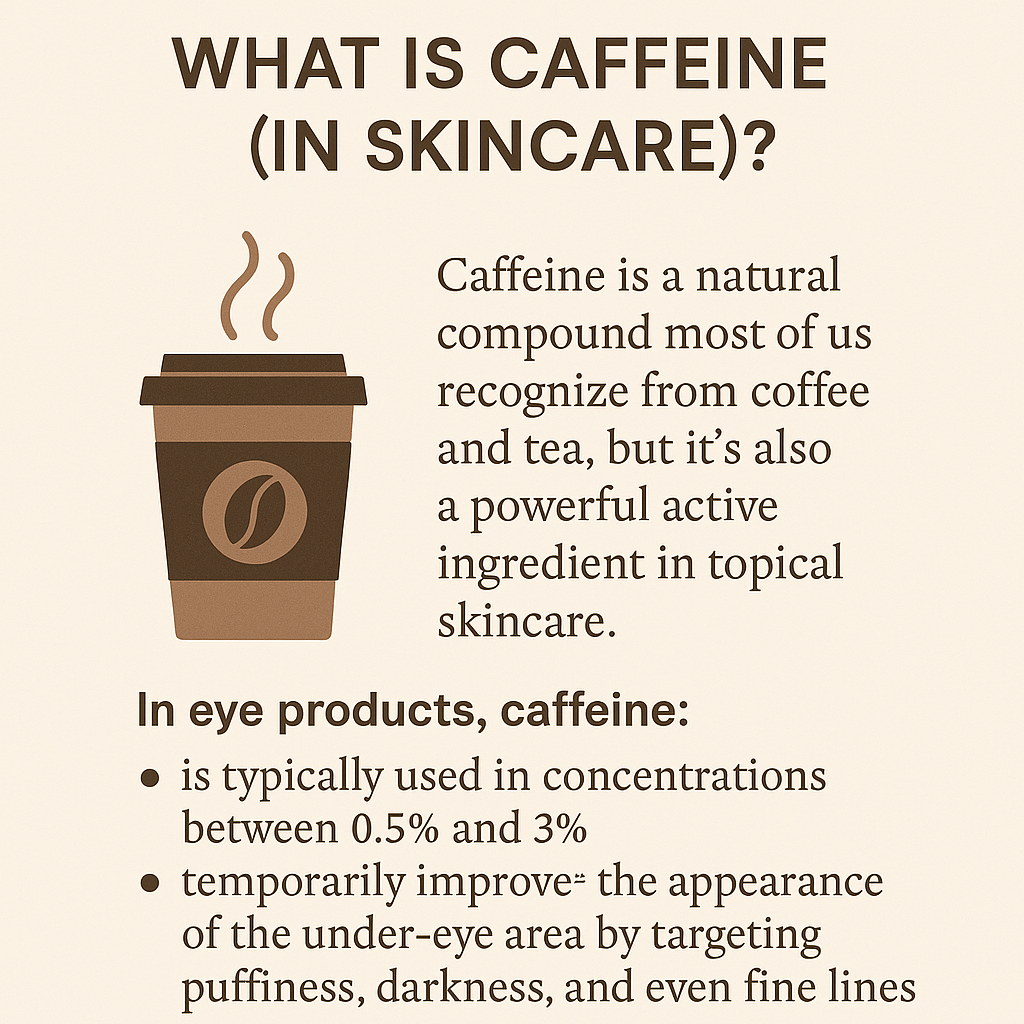
Caffeine (chemically known as 1,3,7-trimethylxanthine) is a methylxanthine compound found naturally in coffee, tea, cacao, guarana, and yerba mate. In food and drinks, it is consumed for its stimulating effects on the central nervous system. In skincare, it is applied topically to leverage an entirely different set of biological actions that operate at the skin tissue level.
In under-eye products, caffeine is typically used at concentrations between 0.5% and 3%. Below 0.5%, effects are negligible. Above 3%, additional benefit is not clearly established and there may be minor tolerability concerns for very sensitive skin.

Caffeine in skincare comes in several forms:

Caffeine (pure/anhydrous): The standard form, most commonly used and most researched
Caffeinol: Caffeine combined with ethanol, used in some delivery systems to enhance penetration
Coffee seed extract: Contains caffeine along with other beneficial phytochemicals including chlorogenic acids and ferulic acid
Green tea extract (EGCG): Contains methylxanthines related to caffeine alongside powerful antioxidant catechins
Guarana seed extract: A natural caffeine source used in some formulas for a sustained-release effect
The delivery system matters enormously. Caffeine is water-soluble but has limited natural penetration through the skin barrier. The most effective formulas use penetration enhancers (such as propylene glycol, cyclodextrins, or nanoencapsulation technology) to ensure caffeine reaches the depth where it can produce meaningful biological effects.

How Caffeine Works Under the Eyes: The Detailed Science

1. Vasoconstriction — Reducing Dark Circles at Their Source

Caffeine is a well-established vasoconstrictor — it causes blood vessels to narrow and constrict. When applied topically to the thin under-eye skin, this mechanism directly addresses the most common cause of dark circles: blood showing through translucent skin.
By constricting the fine capillaries beneath the surface, caffeine:
Reduces the visible blue-purple discoloration from pooled venous blood
Decreases the overall "shadowed" appearance of the under-eye zone
Produces a visible brightening effect that is noticeable within 15–30 minutes of application in many users
This effect is temporary — typically lasting 4–6 hours — which is why consistent daily application produces better results than occasional use.

2. Reducing Puffiness Through Adenosine Receptor Antagonism

This is where caffeine's mechanism becomes particularly interesting. Caffeine works by blocking adenosine receptors in tissues. Adenosine is a signaling molecule that, among other effects, promotes vasodilation (widening of blood vessels) and fluid accumulation in tissues.
By blocking these receptors, caffeine:
Reduces fluid accumulation in the loose connective tissue beneath the eyes
Decreases vascular permeability (the leakiness of blood vessel walls that allows fluid to seep into surrounding tissue)
Improves lymphatic drainage from the under-eye area
The result is measurable reduction in puffiness — particularly the kind caused by fluid retention from sleep, salt intake, allergies, or minor inflammation.

3. Potent Antioxidant and Anti-Inflammatory Action

Caffeine is a genuinely powerful antioxidant. It scavenges reactive oxygen species (ROS) — the unstable molecules generated by UV exposure, pollution, and normal cellular metabolism that damage collagen fibers, cell membranes, and DNA.
For under-eye skin, which receives significant cumulative UV exposure over a lifetime, this antioxidant protection is meaningful:
Helps prevent UV-induced collagen degradation in already-thin under-eye skin
Reduces chronic low-grade inflammation that contributes to puffiness and skin aging
May inhibit the enzyme hyaluronidase, which breaks down hyaluronic acid — potentially helping maintain the skin's natural hydration reserves

4. Mild Lipolytic Effects — Addressing Fat-Related Eye Bags

True under-eye bags — the firm, persistent bulges that do not diminish after a good night's sleep — are often caused not by fluid but by herniated orbital fat: small fat pads around the eye socket that migrate forward with age as the ligaments holding them in place weaken.
Caffeine can stimulate lipolysis — the breakdown of fat cells — by inhibiting the enzyme phosphodiesterase, which leads to elevated cyclic AMP levels within fat cells, triggering fat breakdown. However, it is important to be realistic about the magnitude of this effect when applied topically: it is modest and will not produce the results of medical procedures like blepharoplasty. But for minor fat-related puffiness, it can provide a visible reduction over consistent use.

5. Improving Barrier Function and Skin Elasticity

Research published in dermatology journals has found that topical caffeine can:
Reduce transepidermal water loss (TEWL) — the evaporation of moisture from skin cells
Improve skin barrier integrity over time with consistent use

Enhance skin elasticity measurements

Better-hydrated, more elastic under-eye skin reflects light more evenly, looks plumper and smoother, and shows fine lines less prominently.

What the Clinical Research Actually Shows

It is worth being honest about the state of the science: most clinical studies on topical caffeine are small, industry-funded, and of relatively short duration. However, the consistency of positive findings across multiple independent studies provides reasonable confidence in caffeine's efficacy for under-eye concerns.
Key studies include:
2010 placebo-controlled trial: Found both caffeine gel and non-caffeine gel reduced under-eye puffiness, but the caffeine group showed greater improvement — highlighting that while formulation matters, caffeine provides additional benefit beyond base ingredients alone
2015 caffeine pad trial: Demonstrated visible improvement in under-eye puffiness and dark circle appearance after 4 weeks of daily use
2019 biomechanical study: Documented improvements in skin elasticity and firmness in the under-eye area after 8 weeks of topical caffeine application
2023 multi-ingredient eye cream study: A combination of caffeine, vitamin C, and peptides showed significant improvement in fluid retention and skin brightness over 12 weeks — suggesting that caffeine works synergistically with complementary actives
The consistent finding across studies: caffeine works, but results require consistent use over 4–12 weeks and are more pronounced when caffeine is combined with complementary ingredients and delivered via a well-designed formula.

Caffeine vs. Other Under-Eye Ingredients: How Does It Compare?

IngredientPrimary BenefitMechanismBest ForLimitations
CaffeineDepuffing, vasoconstriction, antioxidantAdenosine receptor antagonist, vasoconstrictorFluid puffiness, vascular dark circles, fine linesTemporary effects; won't treat pigment-based dark circles
Vitamin CBrightening, collagen supportInhibits melanin synthesis, antioxidantPigment-based dark circles, dullness, early fine linesUnstable in some formulas; can irritate sensitive skin
RetinolCollagen stimulation, cell turnoverBinds retinoic acid receptorsDeep wrinkles, severe collagen loss, skin thinningIrritating; not suitable for all skin types; avoid around eyes without care
NiacinamideBrightening, barrier repair, anti-inflammatoryInhibits melanin transferAll-around under-eye support, dark circles, poresMore modest effect on puffiness specifically
PeptidesCollagen stimulation, firmnessSignal skin cells to produce collagenWrinkles, loss of firmness, skin thinningSlower results; needs 12+ weeks
Hyaluronic acidPlumping, hydrationHumectant — attracts waterDehydration lines, crepiness, surface drynessDoesn't address puffiness or vascular darkness
Vitamin KVascular dark circlesPromotes blood coagulation, reduces pooled bloodBlue-toned dark circlesLimited strong clinical evidence
CeramidesBarrier repair, hydrationReplenishes skin lipidsDry, sensitive, compromised under-eye barrierNo direct effect on puffiness or dark circles
Cold compressesImmediate depuffingVasoconstriction via temperatureAcute morning puffinessPurely temporary, no skincare benefit

Who Is Caffeine Best For?

Caffeine is an excellent under-eye ingredient for specific concerns, but it is not a universal solution. Understanding which type of under-eye problem you have is essential before committing to any treatment approach.

Caffeine Works Best For:

Fluid-related puffiness: If your under-eye bags are soft, change throughout the day (worse in the morning, better by afternoon), and worsen with salty food, alcohol, allergies, or poor sleep — this is fluid retention, and caffeine directly addresses it.
Vascular dark circles: If your dark circles have a blue, purple, or red-toned appearance, they are likely caused by blood vessels showing through thin under-eye skin. Caffeine's vasoconstrictive action directly addresses this.
Tired, fatigued-looking eyes: The combination of vasoconstriction and anti-inflammatory action gives eyes a visibly more refreshed, awake appearance — even when you haven't slept well.
Fine lines from dehydration: If fine lines under the eyes are worsened by dryness and dehydration, caffeine's barrier-supporting effects combined with a well-hydrating formula can visibly smooth them.
Preventive care in your 20s and 30s: Caffeine's antioxidant properties make it an excellent preventive ingredient for maintaining under-eye health before significant aging changes occur.

When Caffeine Is NOT the Right Answer:

Pigment-based dark circles: If your dark circles are brown or grey — particularly common in deeper skin tones due to melanin deposits — caffeine will have minimal effect. You need brightening ingredients like vitamin C, niacinamide, kojic acid, or tranexamic acid that inhibit melanin production.
Genetic or structural hollowing: If your dark circles are caused by volume loss and shadowing rather than blood vessels or pigment, neither caffeine nor topical skincare will fully address this. Hyaluronic acid filler placed by a qualified professional is the most effective option.
True herniated orbital fat: Large, firm, persistent bags caused by herniated fat pads are not meaningfully treatable with topical caffeine. This typically requires blepharoplasty (surgical correction) for significant improvement.
Severe collagen loss: Very deep wrinkles and significant skin laxity require more aggressive interventions — retinol, peptides, professional treatments like laser resurfacing or radiofrequency — rather than caffeine alone.

How to Choose a Good Caffeine Eye Product

Not all caffeine eye creams are created equal. Here's what to look for when evaluating a product:

Concentration

Look for caffeine listed among the top 5–7 ingredients on the ingredient list (INCI), which indicates a meaningful concentration. Products listing caffeine near the bottom of a long ingredient list likely contain too little to produce a biological effect.

Delivery System

The best caffeine eye products use penetration-enhancing technologies:
Cyclodextrin complexes: Encapsulate caffeine molecules for improved skin penetration
Nanotechnology/nanoparticles: Dramatically improve delivery to target tissue depth
Liposomal delivery: Fat-based capsules that merge with skin cell membranes for optimal delivery
Propylene glycol or butylene glycol: Common penetration enhancers in well-formulated eye products

Complementary Ingredients

Caffeine performs best when paired with synergistic actives:
Vitamin C: Addresses pigment-based darkness while caffeine addresses vascular darkness — together they cover a wider range of dark circle types
Peptides: Add collagen-stimulating benefit for fine lines and firmness
Hyaluronic acid: Ensures the under-eye skin stays plump and hydrated for optimal light reflection
Niacinamide: Adds brightening, barrier repair, and anti-inflammatory support
Vitamin K: May complement caffeine's vascular effects
Formulation Considerations for Under-Eye Skin
Fragrance-free: Fragrance is a leading cause of contact dermatitis, particularly around sensitive eye skin
Ophthalmologist-tested: Look for this designation on products intended for the eye area
Lightweight texture: Heavy, thick creams can migrate into the eyes during the night and cause morning puffiness — gels, light fluids, or lightweight creams are preferable

Building an Effective Under-Eye Routine with Caffeine

Morning Routine (Most Important for Caffeine)

Caffeine's vasoconstrictive effects are most valuable in the morning when puffiness is at its peak. Apply your caffeine eye product as the first step after cleansing, before other serums and moisturizer.

Cleanse face gently with a mild, fragrance-free cleanser

Apply caffeine eye product: Use your ring finger (lightest pressure) to gently pat — never rub — a small amount along the orbital bone beneath the eye. Do not apply directly on the lash line or eyelid.

Apply face serum (vitamin C or niacinamide)

Moisturize
Apply SPF — critically important for under-eye skin, which is highly susceptible to UV damage
Evening Routine
Evening is the time for repair and regeneration. Caffeine remains useful at night for its antioxidant effects, but you may also want to layer in repair-focused ingredients.
Double cleanse if wearing SPF or makeup
Eye treatment: Apply caffeine eye cream or rotate with a peptide-focused eye product for collagen support
Hydrating serum over the full face
Richer moisturizer (night formulas can be slightly more occlusive to support overnight repair)
Application Technique Matters
The way you apply under-eye products significantly impacts both efficacy and the health of the delicate skin:
Always use your ring finger — it naturally applies the least pressure
Use a tapping/patting motion along the orbital bone (the ridge of bone encircling the eye socket)
Work from the inner corner outward along the lower eye
Never drag, rub, or pull the skin — this causes mechanical damage to collagen fibers over time
Apply before the skin is completely dry after cleansing — slightly damp skin absorbs actives more efficiently

Lifestyle Factors That Affect Under-Eye Appearance

Skincare alone — however well formulated — cannot fully counteract the effects of consistent lifestyle habits that promote under-eye puffiness and dark circles. For best results with any under-eye treatment including caffeine, address these factors simultaneously:
Sleep position: Sleeping on your back keeps fluid from pooling under the eyes. Side sleeping — particularly on one side — often worsens asymmetric puffiness
Salt intake: High-sodium diets cause the body to retain water throughout tissues, including the loose connective tissue under the eyes
Alcohol: Dehydrates the body, dilates blood vessels, and disrupts sleep quality — a triple contributor to under-eye appearance
Hydration: Chronic under-hydration concentrates fluid in tissues and worsens the appearance of dark circles; aim for adequate daily water intake
Screen time: Prolonged screen use causes eye strain and reduces blink rate, leading to fluid accumulation around the eyes
Allergies: Allergic reactions cause histamine release which dilates blood vessels and causes fluid leakage — managing allergies can significantly improve under-eye appearance
Sun protection: UV exposure is one of the leading accelerators of collagen loss in already-thin under-eye skin; daily SPF is non-negotiable

Frequently Asked Questions About Caffeine for Under Eyes

How long does it take to see results?

Vasoconstriction effects are visible within 15–30 minutes of application. For meaningful improvement in persistent puffiness and dark circles, consistent daily use for 4–8 weeks is typically needed. Maximum benefit from collagen-related improvements may take up to 12 weeks.

Can I use caffeinated coffee or tea directly on my under-eyes?

This is not recommended. DIY coffee or tea applications have unpredictable concentrations, inconsistent pH levels, potential contamination, and lack the penetration-enhancing delivery systems that make commercial formulas effective. They can also cause irritation or allergic reactions.

Can caffeine be used around the eyes if I wear contact lenses?

Yes, with care. Apply the product carefully, avoiding direct contact with the eye, and allow it to fully absorb before inserting lenses.

Is caffeine eye cream safe during pregnancy?

Topical caffeine at normal skincare concentrations is generally considered low risk, but consult your obstetrician before adding new skincare actives during pregnancy as a precaution.

Can I layer caffeine with retinol under my eyes?

Retinol is generally used cautiously around the eye area due to irritation risk. If you use a retinol eye product, apply it on alternate evenings from your caffeine product, or use caffeine in the morning and retinol at night.

Key Takeaways

Caffeine has earned its place as one of the most well-researched and genuinely effective ingredients in under-eye skincare — not because it is fashionable, but because its biological mechanisms directly address the most common causes of under-eye concerns.
It constricts blood vessels to reduce vascular dark circles. It blocks adenosine receptors to decrease fluid accumulation and puffiness. It scavenges free radicals to protect against UV-accelerated collagen breakdown. It may modestly reduce minor fat-related puffiness. And it supports the skin barrier to improve hydration and elasticity in one of the thinnest, most vulnerable areas of skin on your face.
What it cannot do: eliminate pigment-based dark circles, replace lost volume, correct structural fat herniation, or reverse significant collagen loss from deep wrinkles. Knowing the difference between what caffeine addresses and what it does not is the key to setting realistic expectations — and to not wasting time and money on a product that cannot solve your specific problem.
Used correctly, consistently, in a well-formulated product with complementary ingredients, caffeine is one of the most valuable tools you can add to your under-eye skincare routine. Give it 6–8 weeks of dedicated daily use before making a judgment — because like most skincare actives, its magic lies not in a single application but in the cumulative effect of showing up for your skin every single day.
This article is for informational and educational purposes only and does not constitute medical advice. For persistent dark circles, severe puffiness, or significant under-eye aging concerns, consult a board-certified dermatologist.

Post a Comment

Please don't spam here, all comments are reviewed by the administrator.

Previous Post Next Post